 Mwalimu Anthony K. Koech
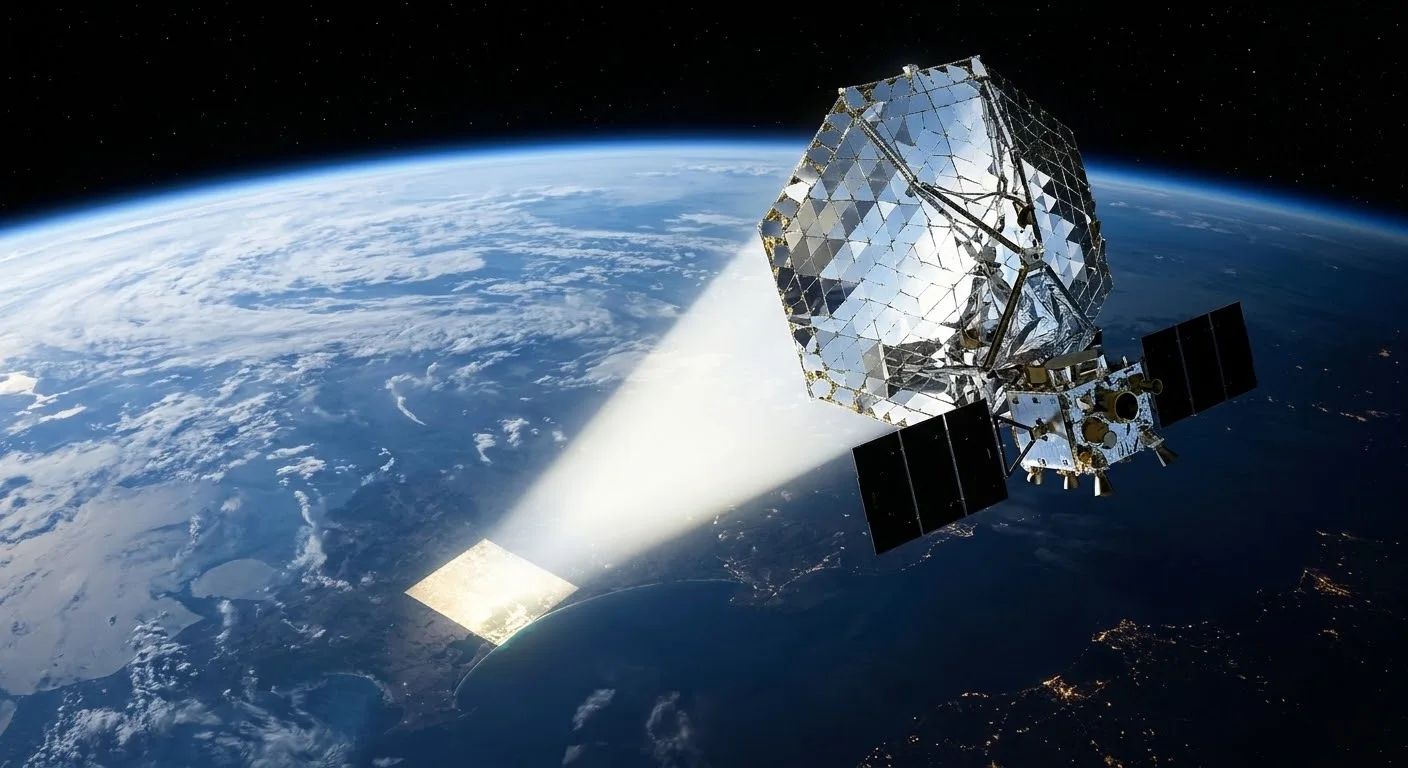
Reflect Orbital and Skyroot Partner for 2027 Space Mirror Test
By Mwalimu Anthony K. Koech | Digital Times Cloud NewsNovember 6, 2026
As global demand for continuous clean energy surges, space-based infrastructure is rapidly moving from theoretical concept to active orbital testing. In a pioneering bid to extend terrestrial solar power generation beyond sunset, U.S.-based startup Reflect Orbital has aligned with India’s Skyroot Aerospace to launch an ambitious orbital light redirection experiment. This initiative aims to solve one of renewable energy's biggest challenges—intermittent generation—while simultaneously introducing directable illumination for nocturnal emergency response.
Low Earth Orbit Infrastructure and Demonstration Timeline
A strategic collaboration has emerged between U.S.-based Reflect Orbital and India’s Skyroot Aerospace to advance the field of space-based solar reflection. The partners have set a target for the second quarter of 2027 to execute a satellite demonstration designed to evaluate the feasibility of redirecting sunlight from orbit after sunset.
The technical core of the mission centers on deploying 18-by-18-meter reflective arrays into low Earth orbit (LEO). This orbital infrastructure is engineered to function as a steerable mirror system, precisely angled to intercept solar rays and direct them toward select locations on the planetary surface.
Solar Power Enhancement and Emergency Applications
The primary functional goal for the developing technology is to bolster renewable energy generation. By delivering concentrated, supplemental sunlight directly to established solar farms during the peak hours immediately following local sunset, the system aims to extend the duration of clean electricity production.
In addition to enhancing solar output, the targeted illumination capability is being developed to support complex emergency operations. Reflect Orbital anticipates utilizing the orbital reflectors to provide daylight-quality light to disaster zones, facilitating accelerated rescue operations, infrastructure repair, and remote humanitarian aid missions.
Deployment Scale and Environmental Impact
While currently in the developmental phase, the venture has established an operational objective to deploy a massive network of up to 50,000 satellites by 2035. However, the ambitious scale of the proposed constellation has raised significant concerns within the scientific and environmental communities regarding interferences with dark-sky integrity.
Astronomers and environmentalists contend that the orbital reflectors present a risk of scattering artificial light across the night sky, potentially disrupting deep-space observations and crucial astronomical research. Furthermore, experts warn that stray illumination spreading beyond designated targets could interfere with sensitive wildlife ecosystems and natural nocturnal cycles. As the demonstration approaches, independent researchers continue to assess the practical feasibility and extensive environmental impacts of large-scale orbital light redirection.