 Mwalimu Anthony K. Koech
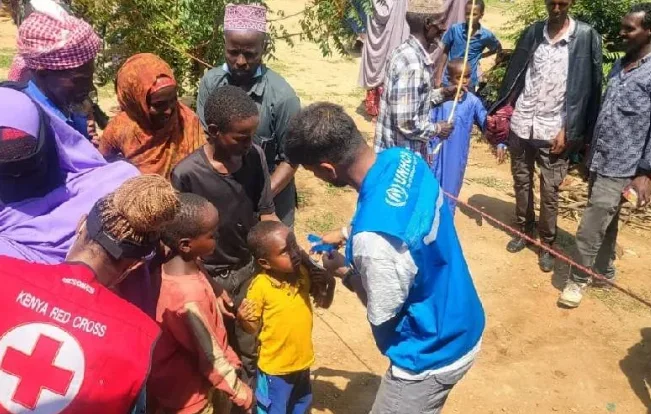
Moyale Border Crisis: Nearly 50,000 Ethiopians Flee into Kenya as Violence Disrupts Border Town
By Mwalimu Anthony K. Koech | Digital Times Cloud News
November 7, 2026
The escalating conflict in southern Ethiopia has triggered a major humanitarian crisis along the Kenya-Ethiopia border, forcing nearly 50,000 people to flee into Kenya through Moyale in search of safety.
The violence, involving tensions between Ethiopia's Oromia and Somali regional administrations, has disrupted normal activities in the border town, leaving businesses struggling, transport services affected and thousands of families displaced.
According to reports from the United Nations and international humanitarian organisations, the influx has placed considerable pressure on local communities in Marsabit County, where host families and temporary shelters are accommodating people fleeing the neighbouring country.
The situation has also raised security concerns on the Kenyan side, with reports of stray bullets crossing the border and affecting residents.
What Triggered the Moyale Border Conflict?
The latest violence is linked to a longstanding territorial and administrative dispute between Ethiopia's Oromia and Somali regional states.
According to conflict-monitoring reports, tensions escalated around October 18, 2026, following a confrontation over the establishment of a Somali regional administration office and the raising of its flag in a disputed area of Ethiopian Moyale.
The disagreement subsequently developed into violent confrontations involving regional security forces and armed groups.
On October 22, reports of gunfire and clashes prompted hundreds of Ethiopian residents, particularly women and children, to cross into Kenya.
The situation has since escalated, with the United Nations reporting that approximately 50,000 people had crossed into Kenya by late October. Registration and verification efforts remain ongoing.
Kenya Strengthens Security as Moyale Faces Humanitarian Pressure
Kenya has intensified security measures along its northern border following concerns that the violence could spill into its territory.
Inspector-General of Police Douglas Kanja visited Moyale on November 6, 2026, assuring residents that security agencies had strengthened surveillance and patrols to protect communities.
According to the Kenya News Agency, Kanja said approximately 10,000 displaced people were staying in temporary shelters and public institutions around Moyale.
He also confirmed that stray bullets had resulted in deaths and injuries on the Kenyan and Ethiopian sides of the border.
Kenyan authorities have further indicated that they are engaging their Ethiopian counterparts to help resolve the situation and facilitate the safe return of displaced families.
United Nations Allocates KSh330 Million for Emergency Assistance
The humanitarian situation has attracted international attention, prompting the United Nations to release emergency funding to support affected communities.
On November 6, 2026, UN Emergency Relief Coordinator Tom Fletcher announced an allocation of $3 million from the Central Emergency Response Fund (CERF), equivalent to approximately KSh330 million.
The funding is intended to support emergency food distribution, clean water, temporary shelter, healthcare and protection services for displaced families.
The International Organization for Migration (IOM), UNHCR, UNICEF, the World Food Programme and the Kenya Red Cross are among the organisations involved in coordinating humanitarian assistance.
However, aid agencies continue to face challenges as the number of displaced people increases and local communities struggle with limited resources.
Economic Activities and Cross-Border Trade Disrupted
Beyond the humanitarian consequences, the conflict has significantly affected economic activities in Moyale.
According to reporting by Daily Nation on November 7, several businesses have experienced reduced customer traffic, while transport operators are struggling with disruptions to cross-border movement.
The conflict has also affected electricity supplies, with parts of Moyale experiencing power interruptions because the town depends heavily on electricity supplied from Ethiopia.
Prices of essential commodities, including rice, cooking oil and milk, have reportedly increased sharply as supplies become limited.
Transport operators have also reported increased demand for journeys from Moyale to Nairobi as Kenyan families relocate to safer areas.
The disruption is particularly significant because Moyale serves as an important commercial gateway connecting Kenya and Ethiopia.
What the Crisis Means for Kenya and Ethiopia
The continuing instability presents challenges for both countries, particularly in border security, humanitarian coordination and regional trade.
For Kenya, the immediate priority remains protecting its citizens, supporting displaced families and preventing the violence from spreading across the border.
For Ethiopia, resolving the tensions between the Oromia and Somali regional administrations remains important to restoring stability and allowing displaced communities to return home.
The situation also highlights the importance of regional cooperation within the Intergovernmental Authority on Development (IGAD) and the wider East African region.
As humanitarian agencies continue their operations, the restoration of security in southern Ethiopia remains central to ending the displacement crisis.
For thousands of families currently seeking safety in Kenya, the immediate concern is access to food, shelter, healthcare and the possibility of returning home once conditions improve.