 Mwalimu Anthony K. Koech
Kenya Moves to Raise Legal Drinking Age to 21 as Ichung’wah Backs Sweeping Alcohol Law Reforms
By Mwalimu Anthony K. Koech | Digital Times Cloud
November 7, 2026
Kenya could soon raise its minimum legal age for purchasing and consuming alcoholic drinks from 18 to 21 years following the introduction of a proposed law in the National Assembly.
The proposed Alcoholic Drinks and Drugs Control Laws (Amendment) Bill, 2026 seeks to introduce major changes to the country's alcohol regulation framework, including restrictions on who can access alcohol outlets, where alcoholic drinks can be sold and how they can be advertised.
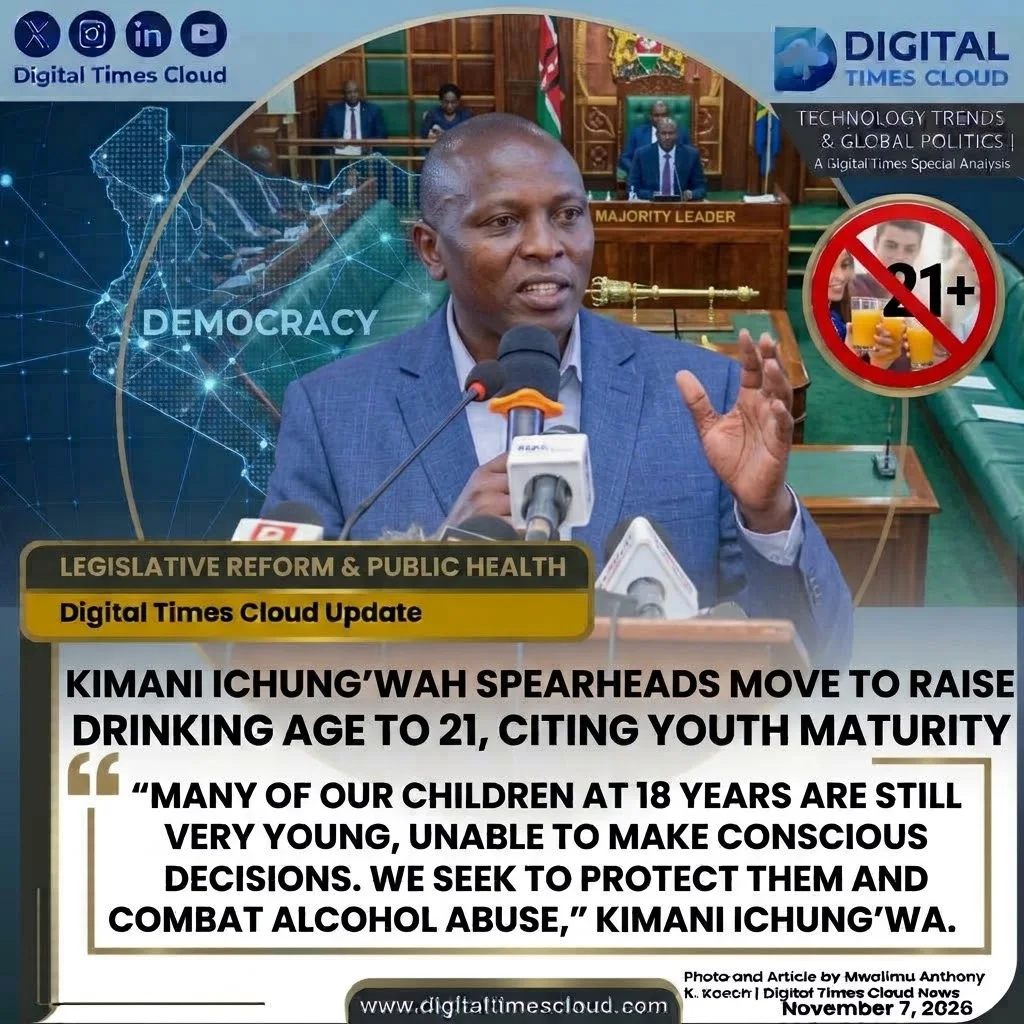
National Assembly Majority Leader Kimani Ichung’wah has publicly supported raising the age limit, arguing that many young people who have just turned 18 may not yet be mature enough to make informed decisions about alcohol consumption.
Speaking during parliamentary proceedings on Thursday, November 5, Ichung’wah said the country needed stronger measures to address alcohol abuse and protect young people from early exposure to drinking.
He acknowledged that the proposed changes could attract opposition from alcohol manufacturers and promoters.
Proposed Law Seeks to Restrict Access for People Below 21
One of the central proposals is to increase the minimum age for accessing alcoholic drinks from 18 to 21 years.
Under the proposed amendments, licensed alcohol-selling premises would not be permitted to admit anyone below 21, whether accompanied by an adult or entering alone.
The proposal also seeks to extend age restrictions to other activities within the alcohol industry, including certain licensing and employment arrangements.
If Parliament approves the changes and the Bill becomes law, businesses would need to adjust their operations and age-verification procedures to comply with the new requirements.
The proposed legislation also seeks to introduce a 300-metre separation distance between alcohol outlets and learning institutions serving people below 21 years.
Online Sales, Advertising and Supermarket Restrictions
Beyond the proposed age limit, the Bill outlines wider restrictions that could significantly affect Kenya's alcohol industry.
Among the proposed measures are restrictions on selling alcoholic drinks through online platforms, courier services, home deliveries, hawking and vending machines.
The legislation also seeks to prohibit alcohol advertising and promotion online, potentially affecting digital marketing campaigns and social media promotions by alcohol brands.
Other proposals would restrict the sale of alcoholic drinks in supermarkets and several public and commercial spaces, including certain educational, recreational and transport facilities.
The Bill further proposes a levy of KSh2 per litre on alcoholic drinks manufactured or imported into the country. The revenue would support alcohol-control programmes and institutions involved in addressing alcohol and drug abuse.
It also proposes tougher penalties for violations of the Alcoholic Drinks Control Act, with some offences attracting fines of up to KSh10 million, imprisonment of up to five years, or both.
What Happens Next?
The proposed legislation is not yet law. Its introduction in the National Assembly marks the beginning of the parliamentary process, not the immediate implementation of the proposed restrictions.
The Bill must proceed through the relevant parliamentary stages, including public participation, debate and voting. If passed, it would then require presidential assent before becoming law.
For now, the existing legal age threshold remains 18 years under the current Alcoholic Drinks Control Act.
The proposed reforms have the potential to reshape Kenya's alcohol industry, affecting consumers, manufacturers, retailers, distributors and businesses operating within the sector.
As Parliament considers the proposals, public debate is expected to focus on balancing efforts to address alcohol-related harm with the economic and regulatory implications of the proposed restrictions.