 Mwalimu Anthony K. Koech
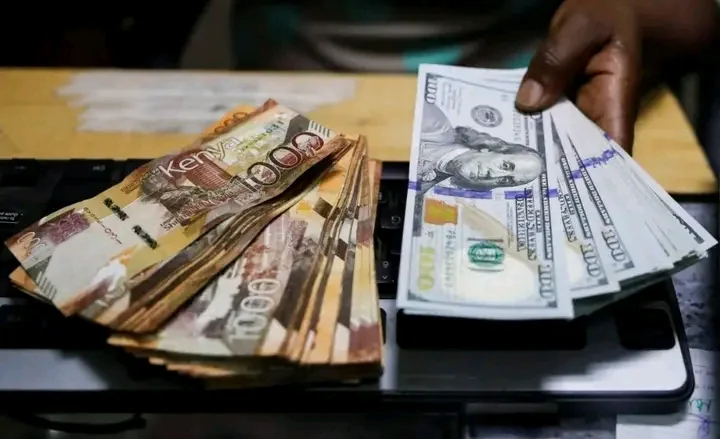
World Bank Warns Corruption Is Costing Kenya Billions, Adding KSh352 Billion to Borrowing Pressure
By Mwalimu Anthony K. Koech | Digital Times Cloud News
November 7, 2026
Kenya is losing significant economic opportunities to corruption, procurement fraud and weak governance, according to a new World Bank report warning that the practices are worsening the country's public finances and slowing economic development.
In its latest Kenya Economic Update, released on November 4, 2026, the World Bank estimates that corruption and collusion contribute up to two percentage points of Gross Domestic Product (GDP) to Kenya's annual budget deficit.
Based on an estimated nominal GDP of KSh17.6 trillion, the impact translates to approximately KSh352 billion in additional annual borrowing requirements.
The findings highlight the financial consequences of corruption beyond individual scandals, showing how weak public institutions, inflated procurement costs and bribery can place additional pressure on taxpayers and government borrowing.
The World Bank identifies governance weaknesses as one of the major constraints preventing Kenya from achieving faster and more inclusive economic growth.
Public Procurement and Infrastructure Projects Under Scrutiny
Public procurement is among the areas highlighted in the report as particularly vulnerable to corruption and inflated expenditure.
Approximately 10 per cent of Kenya's GDP flows through public procurement, making government contracts a significant area where transparency and competitive tendering are essential.
However, the World Bank identifies gaps in the publication of detailed government contract information, raising concerns about accountability in the use of public resources.
The report also examines the cost of Kenya's Standard Gauge Railway (SGR), which connects Nairobi to Mombasa.
Kenya's railway reportedly cost approximately US$7.6 million per kilometre, compared with US$5.7 million for Tanzania's railway and US$5.3 million for the Djibouti–Addis Ababa railway.
Using Tanzania's construction costs as a benchmark, the World Bank estimates that Kenya could have saved up to US$900 million.
At least 30 per cent of the potential cost difference is attributed to governance-related challenges, including non-competitive contracting, land speculation and irregularities in land compensation.
The report also raises concerns about electricity procurement. It notes that competitively procured solar power projects are approximately 47 per cent cheaper than directly negotiated agreements, illustrating the potential financial benefits of transparent procurement.
Businesses and Informal Workers Bear the Cost
The effects of corruption extend beyond government expenditure, affecting businesses, small-scale traders and workers who interact with public institutions.
According to the World Bank, 39 per cent of Kenyan firms identify corruption as a major constraint to their operations.
The report further indicates that approximately 36 per cent of businesses experienced at least one request for a bribe in the preceding year.
Medium-sized enterprises face particular difficulties, with about 48 per cent reporting that they need to provide gifts to public officials to get things done.
Informal workers are also affected by bribery demands and frequent enforcement encounters.
Boda boda operators and small-scale traders face additional financial pressure when asked to make unofficial payments, reducing the money available for household needs, business operations and investment.
The World Bank warns that such practices discourage business expansion, weaken innovation and undermine the country's employment potential.
Anti-Corruption Reforms Could Unlock Economic Growth
Despite the concerns raised, the World Bank says Kenya could achieve significant economic gains by strengthening governance and improving public resource management.
Its economic modelling indicates that moderate governance reforms could increase GDP by 8.7 per cent by 2035 compared with a scenario without those reforms.
More ambitious reforms could raise GDP by more than 20 per cent and support up to 7.7 million additional and better-quality jobs.
The report also identifies opportunities to reduce public debt, improve investor confidence and lower the cost of government borrowing.
Among the recommended priorities are transparent public procurement, stronger beneficial ownership disclosure, improved tax and customs administration, fiscal discipline and reduced opportunities for bribery in public institutions.
The Kenyan government has pointed to ongoing reforms, including digitisation of public procurement and measures addressing conflicts of interest.
Treasury Principal Secretary Chris Kiptoo has also acknowledged the importance of good governance in the country's development agenda.
Kenya's Economic Growth Outlook
The World Bank's warning comes as Kenya continues to navigate high public debt, significant interest payments and pressure to finance essential services.
The lender estimates that Kenya's economy grew by 5.2 per cent in the first half of 2026 and has revised its full-year growth forecast to 4.6 per cent, up from its previous projection of 4.3 per cent.
However, public debt stood at 72.3 per cent of GDP in August 2026, while interest payments absorbed approximately one-third of government revenue, according to the World Bank.
These pressures limit the resources available for infrastructure, healthcare, education and other development priorities.
The report ultimately presents corruption as an economic challenge with consequences for public finances, business competitiveness, employment and household welfare.
For Kenya, the findings underline the importance of accountability and transparent management of public resources as the country seeks sustainable economic growth and improved living standards.